The 114th Tour de France will begin in Edinburgh on 2 July 2027 and conclude in Paris on 25 July, with the peloton covering 3,479 kilometres across 21 stages, according to Radsport-News.com. The route was unveiled at the official presentation at the Palais des Congrès in Paris.
The organisers have built a course that offers three summit finishes and, unusually, two individual time trials. The first race against the clock runs 38 kilometres from Blois to Chambord; the second, 33 kilometres around Toulouse, opens the decisive third week.
By the ASO's official classifications, the route contains seven flat stages, six hilly stages, six mountain stages — three of them ending uphill — and the two time trials.
Why it matters
The 2027 edition leans deliberately towards riders who can exploit both a long, flat time trial and a steep finishing climb, and the early running in Britain hands the sprinters a rare chance to wear yellow. The placement of the second time trial just before the Pyrenees also gives the general classification contenders a final chance to reshape the standings before the race's hardest days.
A British start and an early rest day
This is the third Grand Départ on British soil this century. The race opens at Edinburgh Castle with the team presentation before the first stage sets off from the city centre. The route then runs largely flat westwards, crossing into England roughly 40 kilometres from the line. Carlisle hosts a 1,500-metre finishing straight that rises gently — a likely setting for the first mass sprint.
Stage 2, from Keswick to Liverpool, is also classed as flat despite around 3,000 metres of climbing spread over 223 kilometres, so another sprint by the Mersey seems probable.
Wales hosts the third and final British day. The first half is rolling rather than severe, but the second half brings several climbs, finishing with the steep Cote de Caerffili — two kilometres at 8.1 per cent, with the final 1,000 metres reported to be especially sharp. Only twelve descending kilometres separate the summit from the finish, which Radsport-News.com suggests could suit a puncheur hunting the yellow jersey.
The first rest day falls on the opening Monday, allowing the whole race entourage to relocate from Cardiff to Normandy.
Normandy, Brittany and the road east
Stage 4 is a 171-kilometre loop starting and finishing at Cherbourg-en-Contentin on lightly rolling roads. It looks like another sprinters' day, though a 900-metre ramp at 10 per cent ten kilometres from home, combined with an uphill closing kilometre, could disrupt the fast men.
Stage 5 carries the race into Brittany from Pontorson, passing the Mont-Saint-Michel in the opening kilometres. The terrain is again mildly hilly and grows harder towards the end. Plumelec's finishing circuit climbs the Cote de Cadoudal (1.7 kilometres at 6.2 per cent) twice, with the line at the top — no place for pure sprinters.
Stage 6 points east from Vannes over 193 flat kilometres to Angers, where the sprinters should return. A longer transfer then takes the race to Blois for the first time trial, a fast, flat 38-kilometre run to Chambord.
The westward-to-eastern crossing of France continues on stage 8, which starts in Bourges — the only town hosting both the men's and women's races in 2027 — and ends 224.5 kilometres later at Le Creusot. The opening is flat, but the final 45 kilometres contain two medium mountains: the Croix de la Libération (4.6 kilometres at 5.3 per cent) and the Signal d'Uchon (5.7 kilometres at 5.7 per cent), leaving 18 kilometres plus one smaller rise to the finish. Radsport-News.com notes that this closing stretch mirrors stage 7 of the 2021 Tour, where Primoz Roglic crashed on the Signal d'Uchon and lost his hopes of overall victory.
The mountains arrive
Stage 9 closes the first week with one of the race's hardest days, running from the bird park at Villars-les-Dombes to the edge of the Alps and a punishing summit finish at the Grand Colombier — 17.4 kilometres at 7.1 per cent.
The second summit finish comes on stage 11, which ends at Les Saisies at 1,650 metres. The race then heads south to Montpellier, where stage 13 finishes and stage 14 begins the following day. That stage runs to Mende, where a demanding hilly finish awaits at the town's well-known airfield.
Albi and Toulouse lead the race towards the Pyrenees. The Col de Portet, at 2,215 metres, provides the finale of stage 18, which packs in 5,400 metres of climbing and also crosses the Col du Tourmalet — a combination Radsport-News.com describes as the queen stage of the 2027 Tour. The next day brings another 4,300 metres of ascent on the way to Laruns, though the run to the line is downhill.
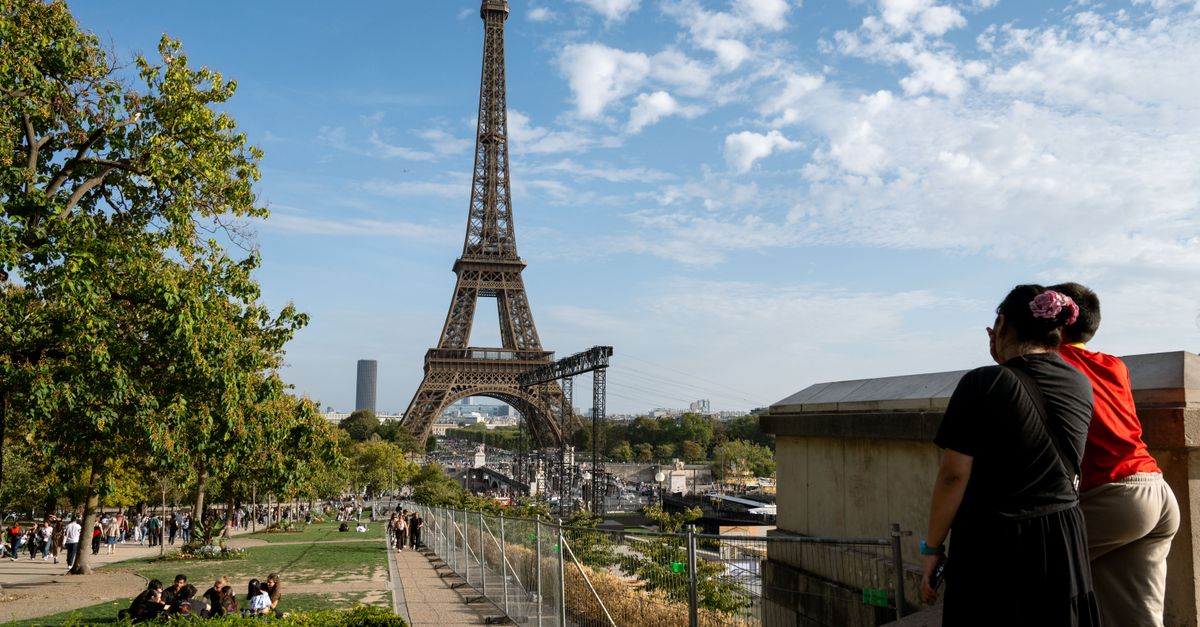
Stage 20 into Libourne should belong to the sprinters. The race then flies to Paris for the finale on the Champs-Élysées, which this time climbs Montmartre three times — meaning the 2027 Tour is unlikely to close with a traditional bunch sprint.
What to watch
The full stage-by-stage profiles released by the ASO will show exactly where the second time trial and the Pyrenean stages sit relative to each other, and whether the Montmartre circuit produces the late attacks the route seems designed to invite.